
Buying Coffee Syrups Wholesale: Flavour Planning, Cost per Serving and Ordering for Cafés
Choosing a core flavour range, understanding pump dosage, and working out what a shot of syrup actually costs you — a practical guide for café owners, hotel and restaurant buyers and distributors.
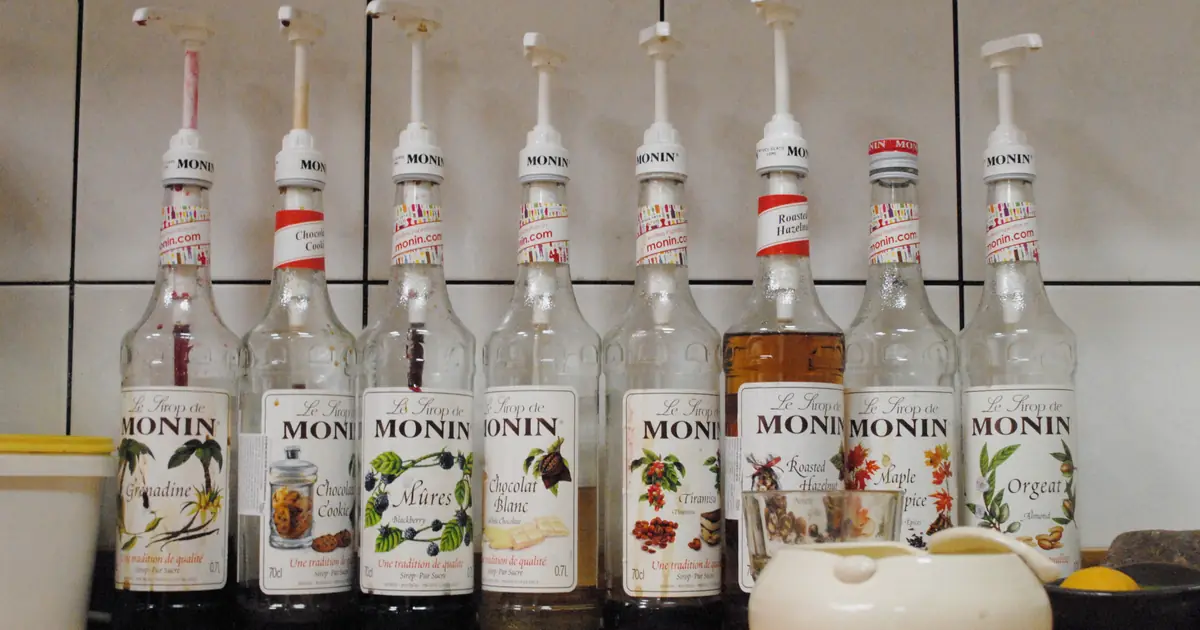
Flavoured syrups are one of the few café inputs where a small buying decision shows up directly in margin. A bottle lasts weeks, costs a few euros and adds a premium to every drink it touches. Buy the wrong flavours and they sit; buy the wrong format and your team doses by eye. This guide covers choosing a starting range, working out what a serving actually costs, and what to confirm before ordering.
Start with a core range, not a catalogue
Syrup ranges run to well over a hundred flavours. Almost no café needs more than a handful. The practical approach is a small permanent core that covers the drinks people actually order, plus a rotating seasonal slot or two.
A workable core for most coffee-led sites is vanilla, caramel and hazelnut. Those three carry the majority of flavoured-coffee orders in most markets, they work in both hot and iced builds, and none of them is seasonal. Chocolate sits slightly apart — it is often a sauce rather than a syrup, which matters for the reasons below.
Seasonal additions are where money gets wasted. A pumpkin spice or gingerbread line sells hard for six to eight weeks and then stops. Order those against a defined window rather than a standing quantity, and treat leftovers as a cost of the promotion.
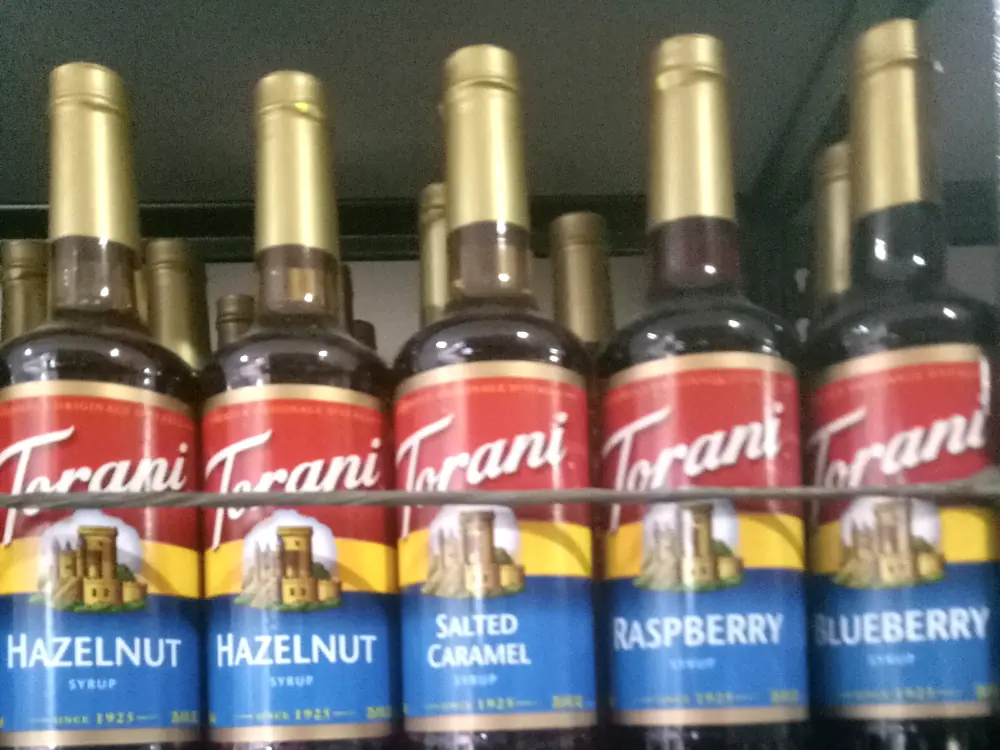
Syrups and sauces are not interchangeable
This catches out more buyers than anything else on the list. A syrup is thin, sugar-based and designed to dissolve into a liquid — it goes into the drink. A sauce is thick and emulsified, designed to hold its shape — it lines a cup, finishes a whipped top, or gets blended into a frappe.
Put a sauce through a standard syrup pump and it will clog or under-dose. Put a syrup where a sauce is wanted and it disappears into the drink instead of sitting on it. Chocolate and caramel exist in both forms, which is exactly why they cause confusion. Hershey's syrup and the DaVinci Gourmet range both include products in this area, so specify which form you need rather than ordering by flavour name alone.
Bottle size, pump fit and dosage
Syrups are supplied in several bottle formats, and the pump is not universal. Formats commonly produced include 700ml and 750ml glass, one-litre PET, and smaller 25cl bottles. Pumps are matched to a specific bottle, and a pump that fits a plastic litre bottle will not necessarily fit a glass one.
Dosage per pump varies too, and this is worth checking carefully. Torani states on its own site that its pump dispenses 1/4 oz of syrup per pump and fits its 750ml bottles. For other brands, published figures differ between retailers — we found third-party listings quoting 5ml, 10ml and 1/4 oz pumps for similar bottles, sometimes contradicting each other on which bottle a given pump fits.
The practical rule: confirm the pump volume and bottle fit against the manufacturer's own documentation for the exact SKU you are buying, not against a retailer listing or an article. Dose is the basis of every cost calculation you make, so an assumed figure propagates into every number downstream.
Working out servings and cost per drink
Once you know the bottle volume and the dose per pump, the arithmetic is simple. The figures below are a hypothetical illustration only — they are not a price quotation, and they do not reflect any specific product's cost or specification.
| Step | Hypothetical example |
|---|---|
| Bottle volume | 1,000 ml |
| Dose per pump | 10 ml |
| Pumps per bottle | 1,000 ÷ 10 = 100 |
| Pumps per drink (house standard) | 2 |
| Drinks per bottle | 100 ÷ 2 = 50 |
| Illustrative bottle cost | €8.00 (assumed figure, not a quotation) |
| Syrup cost per drink | €8.00 ÷ 50 = €0.16 |
Two things fall out of that. First, syrup is usually a small share of drink cost — which means the flavour decision should be driven by what sells, not by shaving cents off the input. Second, the dose is the variable that matters. Moving from two pumps to three raises your cost per drink by 50% and changes nothing a customer notices. Setting a house standard and training to it is worth more than negotiating the bottle price.
Run the same calculation with your own confirmed bottle size, pump dose and quoted cost. Do it per flavour, because bottle formats are not always consistent across a range.
Reordering against actual sales
Most over-ordering comes from buying by instinct rather than by rate. Once you know drinks per bottle, work backwards from till data: a flavour selling 40 drinks a week against a 50-drink bottle is roughly one bottle a week, so four weeks' cover is four bottles plus a margin — not a case because a case was the default.
Weight the order towards the core and keep the long tail shallow. A flavour selling two drinks a week does not need the depth vanilla does, and a bottle taking six months to empty will likely pass its post-opening window first.
Allergens, storage and shelf life after opening
Syrups are generally shelf-stable unopened, but three things must be checked against the exact manufacturer's label for the product you receive rather than assumed from the category:
- Allergens. Most fruit and classic syrups are allergen-free, but nut-flavoured, cream-style and chocolate products vary by recipe and by production site. If you serve the public you need the current declaration for the batch you hold, not a general statement.
- Storage. Check whether the product requires refrigeration after opening — sauces and dairy-containing lines more often do than clear syrups.
- Shelf life after opening. Manufacturers state a post-opening window, and it is usually far shorter than the unopened date. Label bottles with the date opened; it is the simplest control there is.
Recipes and cross-contact statements change, so take these from the current label or the manufacturer's own documentation each time you take a new batch.
Preparing your wholesale enquiry
Our syrup lines sit within the confectionery and syrups range, alongside Monin, Torani and DaVinci Gourmet. Specifications and case configurations are confirmed per SKU on your quotation rather than published, because they vary by format and production run. A request that includes the following can normally be answered first time:
- Brand and exact flavour per line — "Torani Hazelnut", not "Torani".
- Format — syrup or sauce, bottle size, and whether you need pumps supplied.
- Quantity per line, in cases where you know the configuration.
- Destination country and delivery address or port.
- Any allergen or labelling requirement your market enforces.
We are an independent wholesaler and do not claim appointed-distributor status for the brands we list; availability is confirmed per order. Our logistics page describes how shipment is arranged and our trading terms set out how we trade.
Request a quotation
Send us the flavours, formats, quantities and destination you need and we will come back with availability and pricing for those lines. Request a wholesale quotation through our contact form, or contact us directly:
Food & Drinks Suppliers Sp. z o.o.
Email: sales@fooddrinkssuppliers.com
Telephone: +48 503 926 656
Wrocławska 1, 61-837 Poznań, Poland
Products covered in this guide
Prices are quoted per enquiry. Request a wholesale quotationwith the products, quantities and destination you need.
Frequently asked questions
How many drinks does one bottle of syrup make?
Divide bottle volume by dose per pump, then by pumps per drink. A one-litre bottle at 10 ml gives 100 pumps; at two pumps per drink that is 50 drinks. Confirm both figures against the manufacturer's documentation for your exact product, as pump volumes differ between brands and bottle formats.
What is the difference between a syrup and a sauce?
A syrup is thin and sugar-based and dissolves into the drink. A sauce is thick and emulsified, used for lining cups, finishing whipped toppings or blending into frappes, and generally will not pass through a standard syrup pump. Chocolate and caramel exist in both forms, so specify which you need.
Do syrup pumps fit every bottle?
No. Pumps are matched to specific bottle formats, and dose per pump varies by brand. Torani states its pump dispenses 1/4 oz and fits its 750 ml bottles; for other brands, confirm against the manufacturer's own documentation rather than a retailer listing.
How long does syrup last once opened?
Manufacturers state a post-opening window on the label, usually much shorter than the unopened best-before date. Some products — particularly sauces and dairy-containing lines — need refrigeration after opening. Check the exact label for the product you receive and mark bottles with the date opened.