Buy Red Bull in Bulk: Wholesale Distributor & Suppliers
Businesses searching for ways to buy Red Bull in bulk need more than a simple product listing. Retailers, supermarkets, wholesalers, importers, convenience stores, hospitality businesses and beverage distributors need reliable information about product availability, wholesale cases, sizes, packaging, pricing, shelf life and logistics before committing to a commercial order.
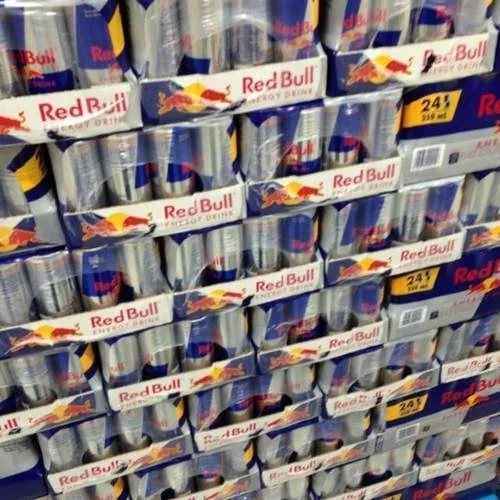
Red Bull is a major global energy drink brand with strong consumer recognition. For businesses, stocking a recognized energy drink can help create a broader beverage assortment and provide customers with a familiar product option.
However, wholesale beverage purchasing should be approached carefully. The lowest advertised price is not necessarily the lowest overall cost, particularly when freight, customs, taxes, handling and local delivery are considered.
A professional purchasing process should therefore compare the complete commercial proposition.
Businesses researching a supplier can visit Food & Drinks Suppliers Sp. z o.o. to explore its beverage and energy drink sourcing options.
This guide explains how to buy Red Bull in bulk, what to look for in a Red Bull wholesale distributor, how to evaluate wholesale cases and packaging, and what retailers and importers should check before ordering.
Buying energy drinks in larger quantities can simplify procurement for businesses that sell beverages regularly.
A retailer that sells energy drinks every day may find it more efficient to purchase cases rather than individual units. A distributor may need palletized quantities to supply several customers. An importer may require significantly larger shipments to make international freight commercially viable.
The right order quantity depends on actual demand, storage capacity, supplier lead times and working capital.
Choosing a Red Bull wholesale distributor requires evaluating several factors at the same time.
A suitable supplier should provide clear product information and transparent commercial terms.
The first consideration is whether the specific Red Bull product required is available.
Buyers should confirm current availability before making payment, particularly for large orders.
A buyer should know exactly how many cans are contained in each wholesale case.
Never assume that every Red Bull product uses the same case configuration. Confirm the exact pack format with the supplier.
Country of origin can be important for importers, distributors and retailers operating in markets with specific labeling or customs requirements.
If origin matters to your business, request confirmation from the supplier before ordering.
A business purchasing several pallets needs enough time to sell and distribute the inventory. Buyers should ask about the available best-before period and consider transportation and customs clearance time.
Businesses searching for Red Bull Energy Drink for sale should distinguish between consumer retail listings and commercial wholesale supply.
Wholesale purchasing generally involves cases, cartons or palletized quantities rather than individual cans.
Before requesting a quotation, establish your exact requirements.
Brand: Red Bull Product: Energy Drink Size: Confirm required size Case quantity: Confirm with supplier Pallet quantity: Confirm with supplier Origin: Confirm with supplier Shelf life: Confirm available stock Order quantity: Based on expected sales Delivery destination: Specify location.
This information allows a supplier to prepare a more accurate commercial quotation.
Retailers need a purchasing system that balances stock availability with inventory costs.
A convenience store might sell a certain number of cases every week, while a supermarket may sell significantly more.
The retailer should track sales and calculate its average weekly consumption.
The actual order should then be adjusted for inventory already in the warehouse and confirmed incoming shipments.
This approach is more reliable than purchasing based solely on intuition.
Supermarkets often require a higher level of purchasing coordination.
A supermarket buyer may need to supply several stores from a central warehouse. This means the buyer must consider product availability, delivery frequency and warehouse capacity.
Supermarket buyers should also analyze sales data to determine which energy drink products deserve the most shelf space.
Importers face additional considerations because products cross international borders.
Before placing an order, importers should verify the requirements of the destination country.
The importer is responsible for ensuring that its intended import complies with applicable local laws and regulations.
A case price does not necessarily tell you which supplier is cheaper because cases may contain different quantities.
Landed cost per unit = Total landed shipment cost ÷ Total units received.
Total landed cost may include product cost, freight, customs-related expenses, duties, taxes, insurance where applicable and local transportation.
This gives businesses a more realistic basis for comparison.
Energy drinks are packaged products, so transportation and storage conditions matter.
Buyers should understand how cases are packed and whether products are shipped individually, by carton or on pallets.
This information is particularly useful when obtaining freight quotations.
Distributors often purchase energy drinks for resale to smaller retailers.
The distributor’s purchasing decision therefore depends on both its own demand and the demand of downstream customers.
The distributor needs enough inventory to satisfy customer orders without creating excessive stock.
A good distribution strategy combines sales forecasting with supplier lead-time management.
There is no universal quantity that works for every business.
This is only an example; actual purchasing quantities should reflect the business’s sales history, storage capacity and cash flow.
Before placing a wholesale order, buyers should verify the following.
Confirm the number of units per case and the total number of cases.
Review payment requirements and terms before completing the purchase.
Businesses sourcing beverages in Europe may benefit from working with suppliers that understand commercial beverage distribution and international logistics.
Food & Drinks Suppliers Sp. z o.o. can be researched as one potential source for wholesale beverage procurement.
Its Red Bull wholesale supplier and distributor page provides a dedicated resource for businesses researching Red Bull supply options across international markets.
Commercial buyers should still confirm current product availability, prices, case configurations and shipping conditions directly with the supplier.
A distributor that specializes in energy drinks does not necessarily need to stock only.
Offering several recognized brands can help retailers serve different customer preferences.
The right product mix depends on customer demand and the market in which the products are sold.
Businesses looking for a second major energy drink brand can explore.
Comparing several products can help a distributor create a balanced energy drink portfolio.
Another option for commercial beverage buyers is Rockstar Energy Drinks wholesale.
Retailers can determine whether Rockstar products fit their customer base and whether purchasing them alongside Red Bull provides useful product variety.
For wholesalers, a wider selection can make it possible to serve customers looking for multiple brands from a single supplier relationship.
Businesses can also investigate Sting Energy Drinks wholesale.
When adding a new energy drink to a wholesale portfolio, buyers should research consumer demand, pack sizes, price positioning and applicable local requirements.
Another product category available for commercial buyers is XL Energy Drinks wholesale.
Including different energy drink brands can give distributors more flexibility when responding to customer requests.
A retailer may want one premium brand, one mainstream brand and one value-oriented product. The precise combination should be determined through local sales data.
Businesses interested in expanding their energy beverage portfolio can also review.
As with any beverage product, buyers should confirm the exact product specification, available size, case configuration and current stock before ordering.
Adding alternative brands can help distributors build product assortments for different retailers and geographic markets.
The commercial suitability of a product depends on customer demand, purchase cost, logistics and local regulations.
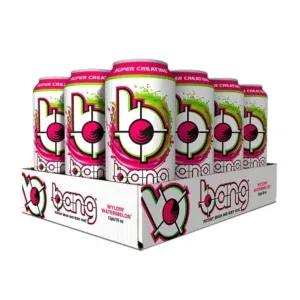
Businesses can research Bang Energy Drinks wholesale as another possible addition to an energy drink assortment.
When evaluating Bang or any other brand, buyers should compare product specifications and commercial terms on a like-for-like basis.
HELL can be considered alongside other brands when a distributor wants to create a diverse range of energy drinks.
The supplier should be asked for current information regarding stock, product sizes, case quantities, prices and delivery options.
For businesses that want to compare several energy drink brands through one wholesale sourcing channel, the energy drinks wholesale online supplier and distributor page can be useful for product research.
A broader wholesale catalog may help businesses identify complementary products instead of purchasing only one brand.
This is particularly useful for distributors that supply multiple retail customers with different product preferences.
If customer preferences change, having multiple brands allows retailers and distributors to adapt their product selection.
The objective is not to purchase every available product. Instead, buyers should identify the SKUs most likely to generate sustainable sales.
Inventory management is critical when purchasing beverages in bulk.
Opening inventory: How much stock is available at the beginning of the period.
Reorder point: The inventory level at which a new order should be placed.
Keeping accurate records helps prevent unexpected shortages.
Bulk purchasing can be beneficial, but excessive purchasing can tie up working capital.
Before accepting a volume discount, calculate whether the additional inventory is likely to sell within a reasonable timeframe.
A lower unit price does not automatically mean a better commercial decision if the product remains unsold for too long.
Once products arrive, they should be stored appropriately according to product and supplier requirements.
The first-in, first-out approach can help businesses manage stock rotation where appropriate.
Convenience stores can be particularly relevant customers for energy drink distributors because consumers often make quick beverage purchases.
The appropriate order quantity depends on customer traffic and consumption patterns.
Hospitality businesses should also consider storage space and delivery schedules when choosing wholesale quantities.
Vending operators need reliable products that fit their machine configuration.
Before ordering, operators should confirm that the chosen can size is compatible with the vending machines being used.
Bulk purchasing can make vending operations more efficient when demand is predictable.
A detailed inquiry helps suppliers provide accurate quotations.
The supplier can then provide relevant commercial information.
Never place a large wholesale order without understanding the commercial terms.
Clear communication reduces the likelihood of misunderstandings.
Wholesale buyers sometimes focus too heavily on the supplier’s product price.
However, an international shipment may have many additional expenses.
The final calculation should then be divided by the number of units received.
Compare suppliers based on price, availability, service and logistics.
Offer multiple energy drink brands where commercially appropriate.
Maintain suitable stock levels without excessive over-ordering.
Allow enough time for shipping, customs and warehouse receiving.
Yes, businesses can source Red Bull through wholesale and distribution channels, subject to supplier availability and commercial terms.
The best supplier depends on the buyer’s location, required quantity, product specifications, price, shipping needs and destination-market requirements. Buyers should compare suppliers using the same criteria.
Check product size, case quantity, origin, shelf life, availability, price, packaging, shipping and documentation.
Divide the total case price by the number of cans in the case. For imported orders, use total landed cost divided by total units received.
That depends on customer demand. Retailers should use sales data to determine which products and sizes have the strongest demand.
Importers may source large commercial quantities, but they should confirm customs, labeling, taxation, food regulations and other requirements in their destination country.
Adding brands such as Monster, Rockstar, Sting, XL, PRIME, Power Horse, Bang and HELL can help distributors create a broader product assortment and serve different customer preferences.
Businesses that want to buy Red Bull in bulk should approach wholesale purchasing as a complete procurement decision rather than focusing exclusively on the advertised product price.
A reliable Red Bull wholesale distributor should be evaluated according to product availability, case configuration, sizes, packaging, origin, shelf life, pricing, logistics and commercial terms.
Retailers can use sales data to establish appropriate reorder levels. Supermarkets can evaluate supplier capacity and delivery schedules. Importers should calculate total landed costs and investigate destination-market requirements. Distributors can consider building a broader energy drink portfolio to serve different customer segments.
Businesses researching Red Bull wholesale supply can start with Food & Drinks Suppliers Sp. z o.o. and review its dedicated.
Buyers interested in expanding their energy drink assortment can also investigate Monster, Rockstar, Sting, XL, PRIME, Power Horse, Bang and HELL wholesale energy drinks.
The wider energy drinks wholesale online supplier and distributor resource can also help businesses researching multiple brands and commercial sourcing options.
Ultimately, the best wholesale purchasing decision is one that balances price, availability, product suitability, inventory requirements and logistics. Before placing any large order, confirm current product details, stock, pricing, packaging, shelf life, shipping terms and applicable market requirements directly with the supplier.
Red Bull wholesal e, Red Bull wholesale supplier, Red Bull wholesale distributor, buy Red Bull in bulk, Red Bull bulk supplier, Red Bull energy drink wholesale, Red Bull wholesale prices, Red Bull cases wholesale, buy Red Bull wholesale, Red Bull distributor, Red Bull energy drinks for sale, Red Bull bulk order, Red Bull wholesale near me, Red Bull supplier for retailers, Red Bull wholesale cases, Red Bull energy drink supplier, Red Bull importers, Red Bull wholesale online.
Your email address will not be published. Required fields are marked *.
Save my name, email, and website in this browser for the next time I comment.