
How to Buy Samyang Buldak Noodles Wholesale: Packaging, Flavours and Ordering Guide
Packet, cup or bowl; Original or Carbonara; 40, 30 or 16 to a carton. A practical guide for retailers, importers and distributors planning their first Buldak order.
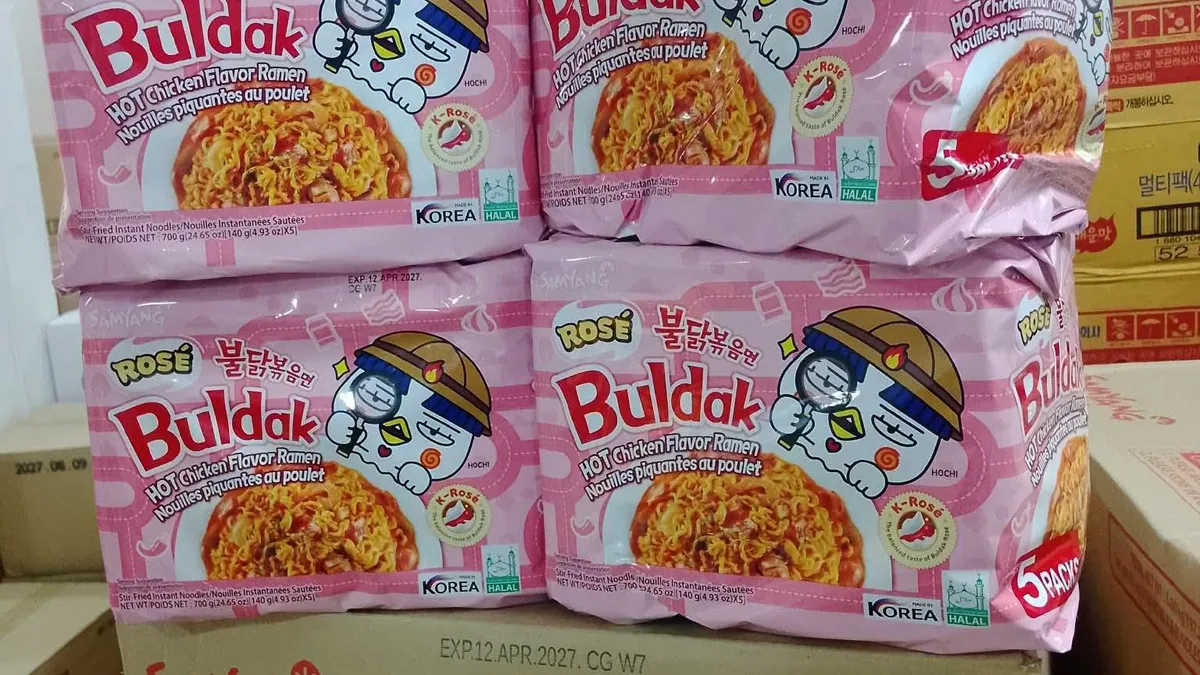
Samyang Buldak has gone from a Korean domestic curiosity to a line international buyers ask for by name. The range is wider and less uniform than it first appears, and the format you choose changes your carton maths, your shelf presentation and your freight cost. This guide covers what the products are, how the formats differ, and what to confirm before ordering.
What Samyang Buldak noodles are
Buldak (불닭, "fire chicken") is a hot chicken flavour ramen line made by Samyang Foods, a South Korean manufacturer, and introduced in 2012. Unlike most instant ramen, it is a stir-fried noodle rather than a soup: the noodles are boiled and drained, then tossed with a concentrated sauce sachet, with dry toppings such as roasted sesame and seaweed flakes added on some variants.
That preparation style is central to the appeal: it gives a thicker sauce cling and a more intense flavour hit than a broth-based noodle, which made the range a natural fit for the social-media eating challenges behind its early international growth. Every line we list carries South Korea as the country of origin and a stated shelf life of 10–12 months.
The flavour range
Buldak is now a family rather than a single product, and the variants sit at very different points on the heat scale. The five your buyers are most likely to ask for are:
- Original — the reference product, and what most customers mean by "Buldak". The benchmark the others are judged against.
- 2X Spicy — the same profile at roughly double the heat. A challenge product that sells on reputation rather than everyday eating.
- Carbonara — a creamy, cheese-forward take that tempers the chilli considerably — usually the strongest performer with customers new to the range.
- Cream Carbonara — a richer, milder development of the Carbonara idea.
- Cheese — chilli heat rounded out with a savoury cheese note; a reliable middle option.
Our catalogue also lists Quattro Cheese, Rosé, Habanero Lime, Jjajang and Stew Type. Availability differs by flavour and by format — not every flavour exists in every pack size, and none should be assumed available until confirmed on a quotation. The current listing is on the Samyang Buldak Noodles range page.
Packet, cup and bowl: three different products
The three formats are not simply three sizes of the same item. They serve different shoppers, occupy different shelf space and behave differently in transit.
Packet
The core retail format and the widest flavour selection. Packets are flexible printed film sachets, typically supplied in five-pack sleeves, and carry the largest noodle weight of the three — generally 130–145 g per pack. They need a pan and a few minutes, so they sell to home cooking rather than immediate consumption, and they are the format to lead with in grocery and Asian-food retail. Original packet and Cheese packet are the usual starting points.
Cup
A lighter, tall cup format at roughly 70–80 g per cup, prepared with hot water alone. Cups suit convenience stores, forecourts, campus retail and vending, where the customer eats within minutes of buying. The flavour selection is narrower than the packet range — Original and Carbonara are among those listed.
Bowl
A wider, shallower container in the 105–120 g range that eats more like a meal and presents better as one. Bowls carry the highest unit price and the lowest carton count, so they reward food-to-go and premium convenience placement rather than price-led grocery. See Carbonara bowl and Cheese bowl.
Carton quantities
The pack-per-carton counts commonly listed on this site are consistent within each format, which makes a first estimate straightforward:
| Format | Typical net weight | Packs per carton |
|---|---|---|
| Packet | 130–145 g per pack | 40 |
| Cup | 70–80 g per cup | 30 |
| Bowl | 105–120 g per bowl | 16 |
Treat these as planning figures, not a specification. Carton counts, net weights and case dimensions must be checked against the exact SKU before an order is confirmed — they can differ by flavour, by production run and by the market a batch was packed for. The product pages carry the figures we hold for each line; the binding specification is the one stated on your quotation.
Planning a mixed-flavour order
Most first orders should be mixed rather than concentrated in one variant: the flavours sell at genuinely different rates, and you will not know your own ratio until you have sold through once.
Weight the order towards the accessible flavours and treat the extreme ones as range-builders. Carbonara and Cheese carry the widest appeal; Original anchors the range; 2X Spicy earns its place through visibility and gift purchases rather than volume. Keep the unusual variants to a few cartons and let sell-through decide the second order.
Think in whole cartons from the start, and watch the arithmetic: because the counts differ by format, an order that looks balanced in cartons is not balanced in units. Ten cartons each of packet, cup and bowl is 400, 300 and 160 units. Set out your mix by SKU when you ask for pricing.
What to confirm before you order
These are the points that most often cause problems after shipment, and all of them are worth settling in writing beforehand.
- Shelf life and remaining life on arrival. The stated shelf life is 10–12 months from production, but what matters commercially is the life remaining when the goods reach you. Agree a minimum acceptable remaining shelf life as a term of the order, and ask how dates are coded on the carton and the pack.
- Labelling and language. Confirm which language the artwork carries and whether your market requires an importer's declaration, a translated ingredient list or local nutrition formatting — and who applies any additional labelling, at what point in the chain.
- Allergens. Ask for the manufacturer's current allergen declaration for each SKU rather than relying on a summary. Recipes and cross-contact statements change, so the declaration should come from the documentation for the batch you are actually receiving.
- Import requirements in the destination market. Requirements vary widely — registration, certificates of analysis, health or origin certificates, and rules on additives or colours can all apply. Confirm what your authority requires before ordering and tell us at quotation stage, so the paperwork is discussed up front.
- Shipping and handling. Settle the Incoterms, the loading point and whether you are buying palletised or loose-loaded. Instant noodles are light for their volume, so a consignment usually fills a container by cube well before it reaches the weight limit. Fried noodle blocks are fragile and heat-sensitive, so agree stacking limits and any temperature precautions for the route.
What to include when you ask for a quotation
A request that carries the following can usually be answered accurately first time, without a round of clarifying questions:
- The exact SKUs you want, by flavour and format — "Buldak Carbonara, packet" rather than "Buldak Carbonara".
- Quantity per SKU, stated in cartons where you can.
- Destination country and delivery port or address.
- Your preferred Incoterms, if you have a standing arrangement.
- Any labelling, certification or documentation your market requires.
- Your minimum acceptable remaining shelf life on arrival.
- Whether this is a trial order or the first call-off of a recurring programme.
- Your company details and the contact who will handle the shipment.
If some of that is undecided, send the request anyway. An approximate volume and a destination is enough to start the conversation.
Request a quotation
The full listing, with the specification we hold for each line, is on the Samyang Buldak Noodles range page. When you are ready to price an order, request a wholesale quotation through our contact form with the SKUs, quantities and destination market you have in mind, and we will respond with current availability and pricing.