
How to Plan a Mixed FMCG Container Order: A Practical Guide for Wholesale Buyers
Combining beverages, confectionery, noodles and other FMCG lines in one container is mostly arithmetic — space, weight, and which products fill which. A practical guide for wholesale buyers planning a consolidated shipment.
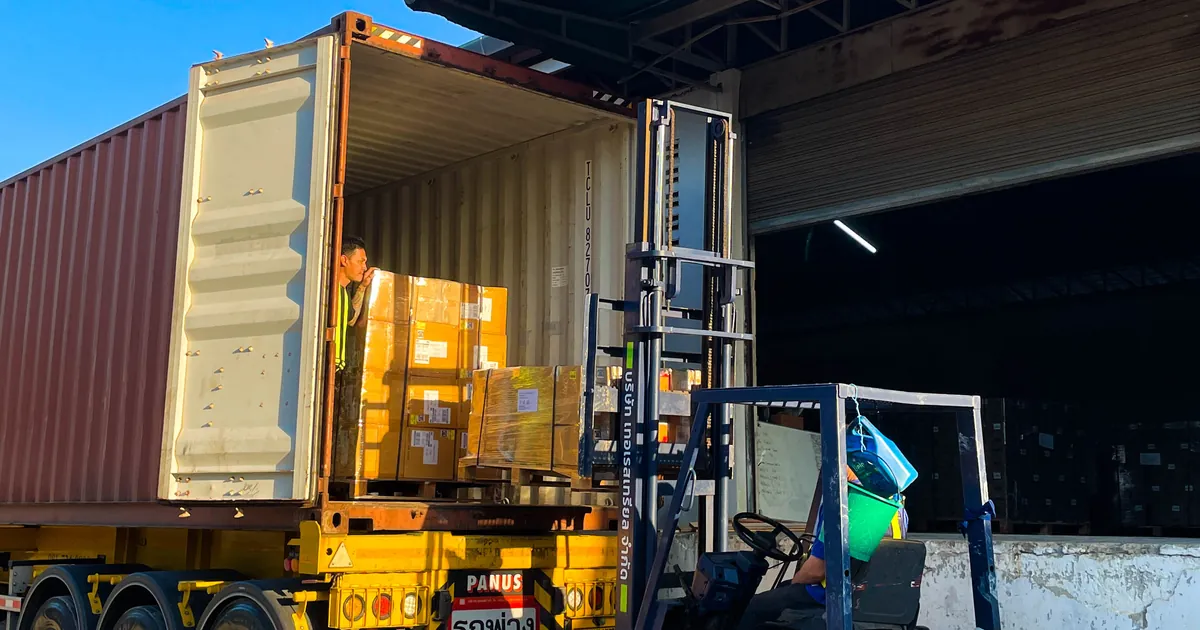
Most wholesale buyers do not want a container of one thing. They want a container of the twenty or thirty lines their customers actually buy — some drinks, some snacks, some ambient food, perhaps some personal care. That is a mixed FMCG order, and planning one well is mostly a question of arithmetic: how much space you have, how much weight you are allowed, and which products fill which. Get that right and the same freight cost carries noticeably more saleable stock.
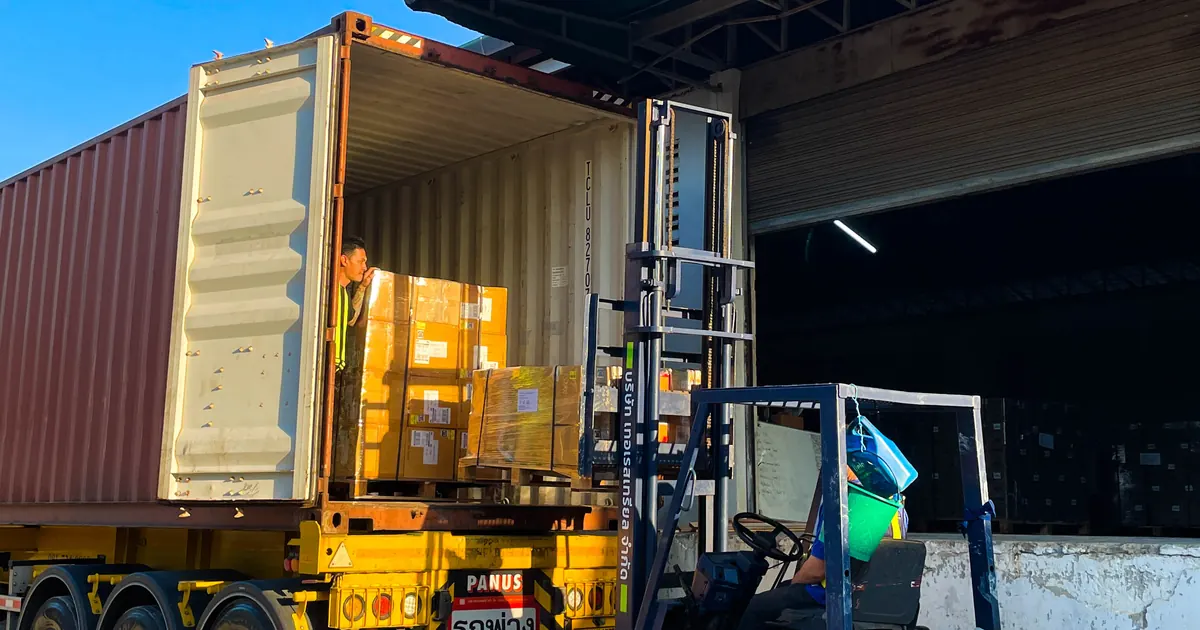
What a Mixed FMCG Order Actually Is
A mixed FMCG order is a single consignment containing multiple product lines, often across several categories, consolidated and shipped together under one set of documents. Instead of buying a full container of mineral water from one supplier and a full container of confectionery from another, you buy an agreed quantity of each from one source and ship them as one unit.
The practical unit of a mixed order is the master carton, not the retail item. You buy in whole cartons of each line, those cartons are built onto pallets or stacked directly into the container, and the mix is described to your supplier as a list of SKUs with carton quantities against each.
Why Buyers Combine Categories
The obvious reason is range: one shipment, one set of paperwork, one arrival, and a shelf that looks complete. But the reason that actually saves money is less obvious, and it is the single most useful thing to understand about container planning.
The weight and volume problem
Every container has two separate limits, and you pay for the container regardless of which one you hit. A 20ft container offers roughly 33 CBM of space and about 28 tonnes of payload; a 40ft offers roughly 67 CBM but only about 26.5 tonnes. Read that again: the 40ft gives you double the volume and slightly less weight allowance. Figures vary by container, carrier and destination road limits, so confirm the actual limits for your booking.
FMCG splits cleanly into two kinds of cargo against those limits:
- Dense cargo — bottled water, soft drinks, beer, canned drinks, glass-packed lines. These are heavy for the space they occupy. A container loaded only with water will reach its weight limit with the container still visibly part-empty.
- Light cargo — instant noodles, crisps, confectionery, tissue, many personal care lines. These are bulky for their weight. A container loaded only with noodles will fill to the roof while carrying a fraction of its permitted tonnage.
Ship either on its own and you waste one of the two limits. Combine them — dense cargo low and light cargo above and around it — and you can approach both limits at once. That is the real argument for a mixed FMCG order: not just convenience, but using the freight you have already paid for. It is also why a supplier who carries beverages, ambient food and personal care in one catalogue can build a better-balanced container than three separate suppliers can.
The Arithmetic That Decides Your Container
Before choosing 20ft or 40ft, you need two numbers for your intended order: total volume in cubic metres and total gross weight. Both are built from carton-level data, which is why carton specifications matter so much at the quotation stage.
| Specification | 20ft standard | 40ft standard |
|---|---|---|
| Internal length | approx. 5.90 m | approx. 12.03 m |
| Internal width / height | approx. 2.35 m / 2.39 m | approx. 2.35 m / 2.39 m |
| Nominal capacity | approx. 33 CBM | approx. 67 CBM |
| Typical max payload | approx. 28,000 kg | approx. 26,500 kg |
| Euro pallets, single tier | 10–11 | approx. 20–25 |
| Realistic usable volume | approx. 25–30 CBM | approx. 57–60 CBM |
The last row matters more than the headline capacity. You will not achieve nominal volume in practice: pallets have footprints that do not divide evenly into the container, cartons leave void space, and loaders need room to work. Planning at 85–90% of nominal is realistic. Anyone promising 33 CBM in a 20ft is quoting a brochure, not a load plan.
Choosing 20ft or 40ft
Work out which limit your mix hits first. If your order is beverage-heavy, you will hit weight, and a 20ft is often the correct choice — a 40ft would simply travel part-empty at a higher cost. If your order is dominated by light ambient food and non-food, you will hit volume, and the 40ft usually wins because its extra space costs far less than a second 20ft.
If your mix is genuinely balanced, a 40ft is normally the better value per unit shipped. The useful discipline is to calculate before you commit rather than defaulting to the larger box.
Carton Quantities and Pallet Planning
Wholesale goods nest in levels: the retail unit the shopper buys, the master carton that holds a fixed number of those units, the pallet that holds the cartons, and the container that holds the pallets. Your order is priced and shipped in cartons; your freight is planned in pallets and cubic metres.
Carton configurations differ by line, and this is where assumptions cause problems. Our Samyang Buldak noodle range is a worked example of how much variation sits inside one product family: packet ramen is supplied 40 packs per carton, cup noodles 30 per carton, and bowls 16 per carton. Three formats of what is nominally the same product, three different carton counts, three different cube-per-carton figures. Our Samyang Buldak wholesale guide covers that range in more detail.
For other categories, carton quantities and pallet configurations are confirmed per SKU on your quotation rather than published, because they vary by production run, pack size and the market a batch was packed for. Ask for them in writing against the exact product codes before you plan freight around them.
Pallets or floor-loaded?
This is a genuine trade-off, not a detail.
- Palletised. Cartons are stacked on pallets, stretch-wrapped and loaded as units. Faster to load and unload, far less handling damage, easier to count in, and much safer if your warehouse is mechanised. The cost is space: pallet footprints do not tessellate perfectly with container dimensions, and the pallet itself consumes height and weight. Expect to lose roughly 10–15% of usable volume.
- Floor-loaded. Cartons are hand-stacked directly into the container, filling nearly every void. You gain meaningful extra volume — which matters most when your cargo is light and volume-limited. The cost is labour: floor-loaded containers are slow to unload by hand, and the handling raises the risk of crushed cartons at the base of a stack.
As a rule of thumb: palletise when you are weight-limited, when your receiving end is mechanised, or when the goods are fragile. Consider floor-loading when you are volume-limited, the cargo is light and robust, and you have the labour to unload it. State which you want in your RFQ, because it changes both the load plan and the quantity that fits.

Which FMCG Categories Mix Well
Not everything should travel together. The practical constraints are weight distribution, temperature tolerance, odour transfer and regulatory status.
Beverages — your weight
Soft drinks, mineral water and energy drinks are the dense element that should sit low in the load. They are also the lines that most often determine whether you need a 20ft or a 40ft. Note that beer, wine and spirits are excise goods and carry administrative requirements that ambient grocery does not — our guide to wholesale food and beverage sourcing in Europe covers excise duty and duty suspension in detail. Glass-packed lines also need more careful stacking than cans.
Confectionery and ambient food — your heat risk
Confectionery mixes well by weight and sells reliably, but chocolate is the most heat-sensitive thing in a typical FMCG container. A steel box crossing the tropics in summer can exceed temperatures that chocolate tolerates, and bloomed chocolate is unsaleable. If your route or season is hot, raise it at quotation stage and consider whether those lines belong in that particular shipment at all.
Instant noodles and dry goods — your volume
Instant noodles, dry snacks and similar lines are the bulky, light cargo that fills the space your beverages leave. Fried noodle blocks are fragile, so they belong above the dense cargo, never beneath it. They are also the lines where floor-loading gains the most.
Non-food lines
Personal care can travel with food in the same container provided packaging is intact and there is no odour transfer risk — strongly scented products are the ones to watch. Note that our Cosmetics & Personal Care range is quotation-only and governed by different rules from food; see the European cosmetics wholesale guide. Aerosols are classified as dangerous goods and must be declared, which affects what else can travel with them.
Shelf Life in a Mixed Consignment
A mixed container has a mixed shelf-life profile, and the weakest line sets your commercial risk. Ocean transit can run several weeks before the goods even reach your warehouse, and that time comes out of the selling window.
Two disciplines help. First, agree a minimum acceptable remaining shelf life on arrival as a written term of the order, per line rather than as a blanket figure — a confectionery line and a beverage line do not need the same cover. Second, avoid putting your shortest-dated lines in your slowest shipment; if something has limited life, it may be better held for a later, faster consignment than loaded into a long ocean route.
Ask how dates are coded on the carton as well as the retail unit. A warehouse that has to open cartons to read dates will cost you hours on every intake.
Labels and Destination-Market Requirements
A mixed container multiplies your compliance surface: every category in it must independently satisfy your destination market. European labelling satisfies Europe; it does not automatically satisfy anywhere else. Requirements for translated ingredient lists, local nutrition formatting, importer declarations and specific warnings vary by country and by product type. Our European food and beverage sourcing guide sets out the EU framework these goods are built to.
Settle three things in writing before the order is confirmed: what the artwork currently carries, what your market additionally requires, and who applies any extra labelling and at what point. Relabelling discovered at the port is expensive and slow.
Documents to Confirm Before Shipment
Confirm which documents your supplier issues and which you must obtain yourself. For a typical mixed FMCG consignment:
- Commercial invoice — itemised by SKU, with values and customs classifications.
- Packing list — the document your warehouse will actually use, showing cartons per SKU, carton dimensions and weights, and which pallet or position each sits on.
- Transport document — bill of lading for ocean, CMR for road, air waybill for air.
- Certificates where required — origin, free sale, health or analysis, depending on destination and product type. These are the slow ones; raise them early.
- Dangerous goods declaration — if the mix includes aerosols or other regulated items.
- Load plan or container stuffing report — worth requesting on a mixed order, because it tells you what is where before you open the doors.
Agree your terms of sale explicitly. Use the Incoterms 2020 edition, which remains current — and note that FOB and CIF apply only to sea and inland waterway transport. Our cosmetics wholesale guide covers Incoterms selection in more depth, and the principles are identical for food and beverages. Our published trading terms set out how we trade.
How to Prepare an RFQ
A request for quotation on a mixed order is a specification, not an enquiry. The more precisely it is written, the more accurate the answer and the fewer rounds of clarification. Include:
- Products — by brand, exact name, pack size and variant. "Buldak Carbonara, packet" rather than "Buldak Carbonara".
- Quantity per line — in cartons where you can, or retail units where you cannot.
- Destination country and port or delivery address.
- Preferred shipping method — ocean FCL or LCL, road, or air, and your Incoterms 2020 rule with the named place.
- Container preference — 20ft or 40ft, and whether you want palletised or floor-loaded.
- Minimum remaining shelf life acceptable on arrival, per category if it differs.
- Labelling and documentation your market requires.
- Flexibility — say which lines are fixed and which can be adjusted to balance the load. This is the single most useful thing you can tell a supplier building a mixed container.
- Company details and the contact handling the shipment.
That last point is worth emphasising. A rigid line-by-line list forces the supplier to quote exactly what you asked for, even if it leaves the container badly balanced. Telling them which quantities are flexible lets them propose a mix that uses the space and the weight properly.
Common Mistakes to Avoid
- Planning in units instead of cartons. You buy and ship whole cartons. An order expressed in retail units gets rounded, and the rounding is rarely in your favour.
- Assuming a 40ft is twice a 20ft. It is roughly double the volume but slightly less payload. Beverage-heavy orders do not scale the way buyers expect.
- Using nominal container capacity. Plan at 85–90%. Loading to brochure figures leaves you short at the dock.
- Assuming one carton quantity across a product family. Formats of the same product can differ sharply — 40, 30 and 16 per carton within one noodle range.
- Ignoring heat on the routing. Chocolate and some personal care lines do not survive every route in every season.
- Loading dense cargo on top of light cargo. Beverages crush noodle and snack cartons. Specify stacking, do not assume it.
- Leaving labelling until shipment. It is the most common cause of goods sitting at a destination port.
- Ordering only proven lines. A first mixed container is also market research. Leave room for a few test lines in small carton quantities.
- Not asking for the packing list in advance. Receiving a mixed container without knowing what is where turns a two-hour intake into a day.
Request a Quotation
Food & Drinks Suppliers Sp. z o.o. supplies beverages, confectionery, instant noodles and personal care lines from Poznań, Poland, which means a mixed container can be built across those categories from one source and one set of documents. You can browse the full product range, see our warehouse and logistics pages, or review the markets we serve.
When you are ready, request a wholesale quotation with your product list, carton quantities, destination and preferred shipping method. Tell us which quantities are flexible and we will come back with a mix that balances weight against volume properly. Prices are not published on this site because they depend on specification, quantity, destination and terms of sale — every quotation is prepared against the order in front of us.
Frequently asked questions
What is a mixed FMCG container order?
A single consignment containing multiple product lines, often across several categories, consolidated and shipped together under one set of documents. Goods are bought and shipped in whole master cartons, which are then palletised or floor-loaded into one container.
Is a 40ft container twice the capacity of a 20ft?
In volume, roughly yes — about 67 CBM against about 33 CBM. In weight, no: a 40ft typically permits around 26.5 tonnes against about 28 tonnes for a 20ft. Dense, beverage-heavy orders often suit a 20ft, while light, bulky cargo suits a 40ft. Limits vary by container, carrier and destination road rules, so confirm them for your booking.
Should I ship palletised or floor-loaded?
Palletise when you are weight-limited, your receiving warehouse is mechanised, or the goods are fragile — you lose roughly 10–15% of usable volume but gain speed and protection. Floor-load when you are volume-limited and the cargo is light and robust, and you have labour available to unload by hand.
Can I combine beverages, food and personal care in one container?
Usually yes, provided packaging is intact, there is no odour transfer risk from strongly scented products, and any dangerous goods such as aerosols are declared. Alcohol carries separate excise requirements, and heat-sensitive lines such as chocolate need route and season considered. Raise the intended mix at quotation stage.
How much of a container can I realistically fill?
Plan at roughly 85–90% of nominal volume — about 25–30 CBM in a 20ft and about 57–60 CBM in a 40ft. Pallet footprints, carton void space and loading access all consume capacity that brochure figures do not account for.
What shelf life will the goods have when they arrive?
That depends on the batch and the transit time, which on an ocean route can be several weeks. Agree a minimum acceptable remaining shelf life as a written term of the order, set per category rather than as a single blanket figure.
What is the minimum order for a mixed container?
We do not publish a single minimum, because it depends on the products, pack sizes and destination. Minimums are confirmed on your quotation. Buyers testing a range typically start with a mixed consignment rather than full-pallet quantities of any one line.
What should I include in my RFQ?
Products by brand, exact name and pack size; quantity per line in cartons; destination country and port; preferred shipping method and Incoterms 2020 rule; container preference and whether you want palletised or floor-loaded; minimum remaining shelf life; and any labelling your market requires. Say which quantities are flexible — that lets the load be balanced properly.