
Wholesale Confectionery Suppliers: A Complete Guide to Importing Chocolate, Biscuits and Snacks in Bulk
Confectionery is one of the most dependable categories in international wholesale — and the one where buyers most often get caught out by heat, labelling and documentation. A practical guide for importers, distributors and retail buyers.
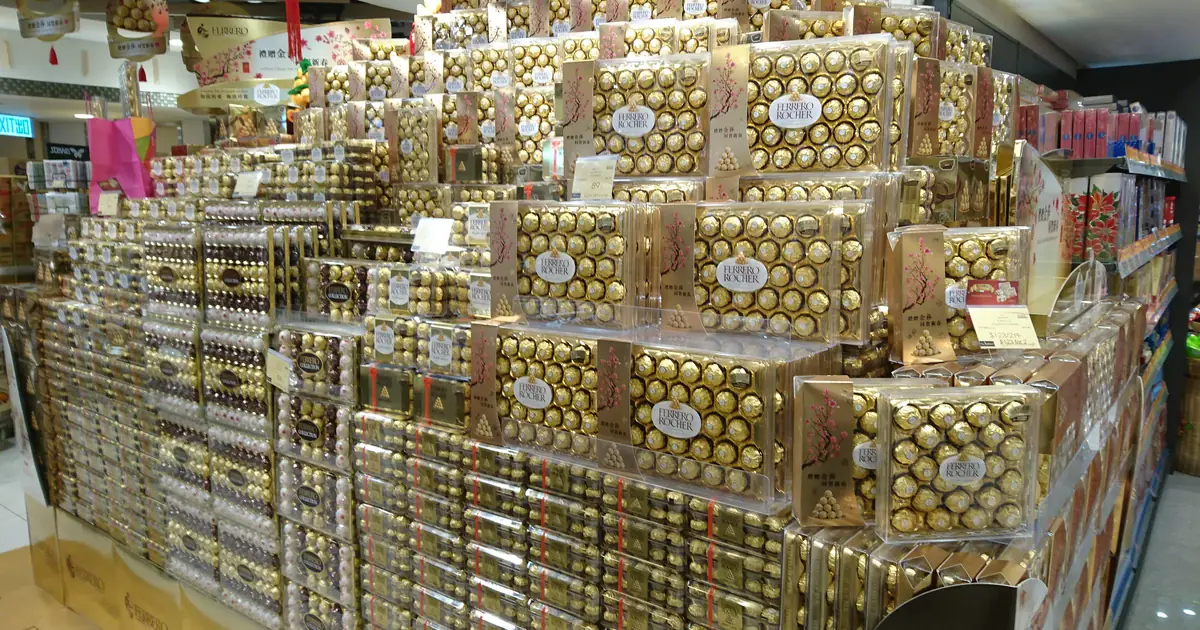
Confectionery is one of the most reliable categories in international wholesale — recognisable, impulse-driven and relatively forgiving on shelf life. It is also where buyers most often get caught out, not on price but on heat, labelling and documentation. This guide covers how branded confectionery is sourced in bulk, what to confirm before ordering, and the risks specific to shipping chocolate across climates.
The international wholesale confectionery market
The category spans unusually wide price points. One consignment can carry countlines sold as pocket-money impulse items and gift-boxed assortments for seasonal premium shelves — letting a buyer serve several retail tiers from one supplier relationship rather than several.
The category also spans unusually wide price points. The same consignment can carry countlines sold as pocket-money impulse items and gift-boxed assortments positioned for seasonal premium shelves. That breadth is useful: it lets a buyer serve several retail tiers from one supplier relationship rather than several.
The trade-off is seasonality and sensitivity. Confectionery demand peaks hard around gifting seasons, and chocolate in particular is the most climate-sensitive thing in a typical ambient container. Both are manageable, but both need planning rather than assumption.
Categories that move in wholesale volume
Our confectionery range runs to 27 lines. The practical groupings below reflect how buyers actually build an order.
Chocolate countlines and bars
The volume core of most confectionery orders: Snickers, Twix, Bounty, Aero and Milka. High rotation, strong recognition, and the lines most exposed to heat damage in transit.
Boxed and gifting confectionery
Ferrero Rocher, Raffaello and Kinder Joy. Higher unit value, strongly seasonal, and more vulnerable to physical damage because the presentation packaging is part of the product. A crushed carton of bars is a markdown; a crushed gift box is a write-off.
Sugar confectionery, gums and mints
Haribo, Mentos, Tic Tac, Sour Patch Kids and Swedish Fish. The practical advantage of this group is that it is far less heat-sensitive than chocolate, so it can absorb routes and seasons that chocolate cannot.
Spreads, syrups and adjacent lines
Nutella alongside syrup lines including Monin, Torani and Davinci Gourmet. These sit between grocery and confectionery, and they are heavier per unit than countlines — worth noting when you calculate pallet weights.
How buyers source branded confectionery in bulk
Branded confectionery reaches international buyers through several routes, and it is worth being clear which one you are using. Goods may come from a brand owner's export arm, an appointed national distributor, or independent wholesalers trading genuine stock across markets. All three supply authentic product; they differ in pricing, availability and accompanying documentation.
Food & Drinks Suppliers Sp. z o.o. is an independent wholesaler, registered in Poznań under KRS 0000682762. We do not claim appointed-distributor status for the brands we list. Practically, availability is confirmed per order rather than guaranteed from a standing allocation — and the documentation question below is one you should ask of any supplier, including us.
Authenticity, batch numbers and traceability
Confectionery is widely counterfeited and widely parallel-traded. Parallel-traded stock is genuine product moved between markets outside the brand owner's official channel — legal in many jurisdictions, but a documentation question rather than a quality one. Counterfeiting is a different problem entirely. Both are reasons to insist on traceability rather than take authenticity on trust.
Under Article 18 of EU Regulation (EC) No 178/2002, every food business must operate traceability on a “one step back, one step forward” basis — able to identify its immediate supplier and immediate customer for every product. Practically, that gives you three things to request:
- Batch and lot codes recorded for your consignment, not just printed on packs. Ask how they appear on the packing list.
- Date coding on the carton as well as the unit. A warehouse opening cartons to read dates loses hours on every intake.
- Supplier traceability. Ask how the supplier meets its own Article 18 obligation.
Shelf life and storage
Most confectionery carries a best before date rather than a use by date, because it is shelf-stable rather than highly perishable. That distinction matters commercially: best-before stock remains saleable and safe past the date in many markets, whereas use-by stock does not. It gives you latitude that chilled categories never have.
What matters is not total shelf life but the life remaining when goods reach you. On an ocean routing of several weeks, much of the window is consumed before the first pallet is checked in. Agree a minimum acceptable remaining shelf life as a written term of the order, set per line rather than as a blanket figure.
Temperature: the risk specific to chocolate
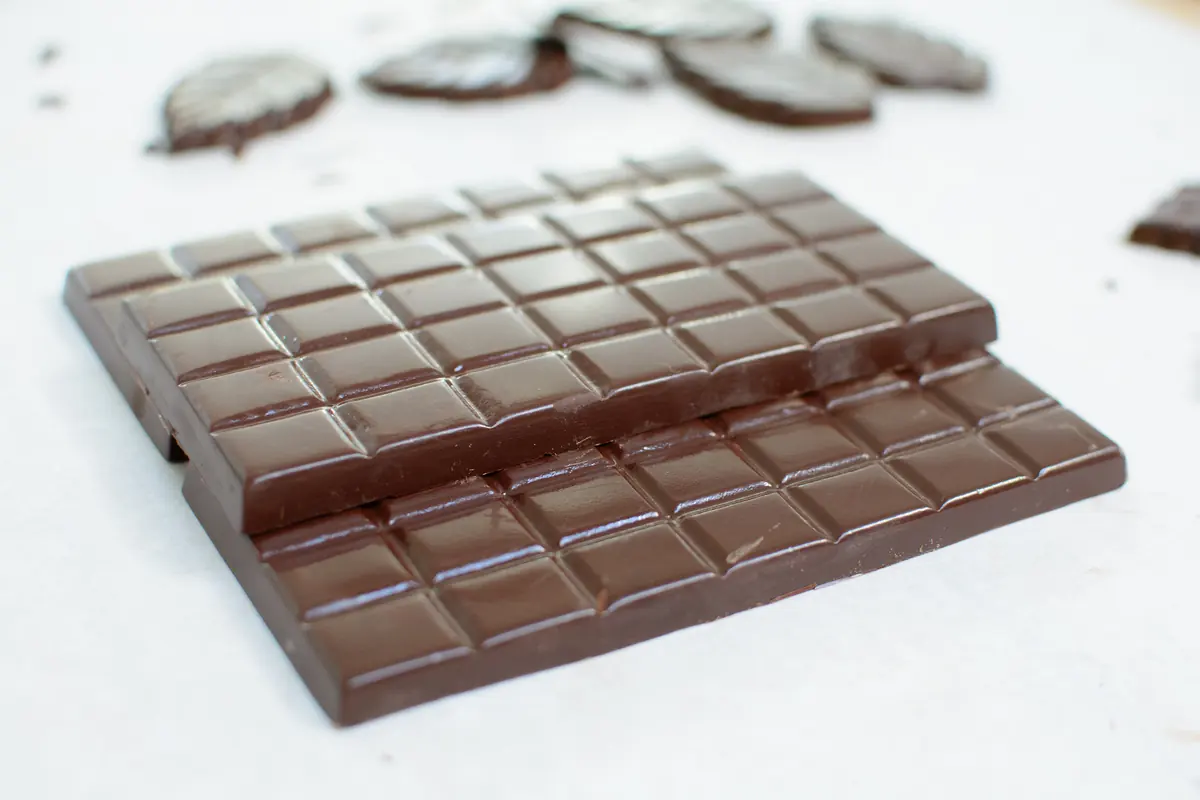
Chocolate is the most climate-sensitive product in a normal ambient container, and the failure mode is cosmetic rather than a safety issue — which makes it worse commercially, not better. Bloomed chocolate is safe to eat and impossible to sell.
Chocolate is the most climate-sensitive product in a normal ambient container, and the failure mode is cosmetic rather than a safety issue — which makes it worse commercially, not better. Bloomed chocolate is safe to eat and impossible to sell.
Recommended storage sits broadly between about 15°C and 20°C, though published guidance differs on the exact limits and you should work to your supplier's and the manufacturer's stated conditions rather than a number from an article. The practical points for a buyer are more useful than any single figure:
- Route and season beat packaging. A steel container crossing the tropics in summer can exceed safe temperatures however the pallets are wrapped. If the routing is hot, the question is whether those lines belong in that shipment at all.
- Temperature-controlled transport solves it but changes the economics. Reefer shipping removes the risk and adds significant cost — worth it for high-value gifting stock, rarely for countlines.
- Split the risk. Send heat-sensitive chocolate on shorter or cooler routings and let gums, mints and sugar confectionery carry the hot-season volume.
- Agree liability in writing before shipping, and make sure it matches your Incoterms rule.
Cartons, pallets and container planning
Confectionery is bought and shipped in whole master cartons. Carton quantities and pallet configurations vary by line, pack format and production run, so they are confirmed per SKU on your quotation rather than published — we would rather confirm a figure against your exact product code than print one that may not match your consignment.
Confectionery is light relative to the space it occupies, so a confectionery-led container usually fills by volume long before it nears its weight limit. That makes it an excellent counterweight to dense cargo such as bottled drinks, and is much of why mixed consignments beat single-category ones. Our guide to planning a mixed FMCG container order sets out the arithmetic in full.
Two handling notes specific to this category: gift packaging is structural as well as decorative, so stacking limits matter more than with countlines; and chocolate should never sit beneath dense cargo, both for crush risk and because lower layers in a stack run warmer.
Labelling and import documentation
Food labelling in the EU is governed by Regulation (EU) No 1169/2011. For confectionery the usual problem points are allergen declarations — which must be emphasised within the ingredients list rather than repeated in a separate panel — and date marking format. Our guide to wholesale food and beverage sourcing in Europe covers the framework in detail.
EU labelling satisfies the EU and nothing else automatically. Your destination may require a translated ingredient list, local nutrition formatting, an importer's declaration or specific warnings. Settle in writing what the artwork carries, what your market additionally requires, and who applies any extra labelling. Relabelling discovered at the port is slow and expensive.
A routine consignment travels with a commercial invoice, packing list and the transport document for the mode used. Certificates of origin, free sale or analysis are destination-specific and can take time to arrange — raise them at quotation stage, not at booking.
Requesting a competitive quotation
Prices are not published on this site, because they depend on the lines, quantities, destination and terms of sale. A request carrying the following can usually be answered accurately first time, and gives you a quotation you can genuinely compare against others:
- Products — brand, exact name and pack format. "Milka 100g bar", not "Milka".
- Quantity per line — in cartons where you know the configuration.
- Destination country and delivery port or address.
- Shipping terms — your Incoterms 2020 rule and named place.
- Minimum remaining shelf life acceptable on arrival.
- Season and routing — flag a hot-climate crossing so chocolate lines can be discussed before loading.
- Labelling requirements your market enforces.
- Flexibility — which quantities are fixed and which can move. The most useful thing you can tell a supplier building a balanced container.
How we support international buyers
Food & Drinks Suppliers Sp. z o.o. supplies confectionery alongside beverages, instant noodles and personal care from Poznań, which means a mixed consignment can be built across those categories under one set of documents. Shipment is arranged per order — see our logistics page, our trading terms and the markets we serve.
Availability is confirmed per order, not guaranteed from standing stock, and specifications are confirmed against product codes rather than published as generic figures. When you are ready, request a wholesale quotation with your product list, quantities, destination and timing. Tell us the routing and season, and we will flag anything we would not recommend shipping on it.
Products covered in this guide
- Ferrero Rocher Candy wholesale
- Milka Chocolate Bar wholesale
- Haribo Gums wholesale
- Nutella Chocolate wholesale
Prices are quoted per enquiry. Request a wholesale quotationwith the products, quantities and destination you need.
Frequently asked questions
What is the minimum order for wholesale confectionery?
We do not publish a single minimum, because it depends on the lines, pack formats and destination. Minimums are confirmed on your quotation. Buyers testing a range typically start with a mixed consignment rather than full-pallet quantities of any one line.
How many units are in a carton?
Carton quantities vary by line, pack format and production run, so they are confirmed per SKU on your quotation rather than published. Ask for the case configuration in writing against the exact product code before planning freight around it.
Will chocolate survive shipping to a hot country?
It depends on the routing, the season and whether transport is temperature-controlled. Chocolate exposed to heat and then cooled can develop fat bloom — a pale grey surface film that is harmless but unsaleable. Flag the destination and timing when you request a quotation so heat-sensitive lines can be discussed before loading.
What is chocolate bloom and is it a safety problem?
No, it is a quality and appearance problem. Fat bloom occurs when cocoa butter migrates to the surface after heat exposure and recrystallises; sugar bloom is caused by moisture, including condensation on over-chilled product. Both are safe to eat and very difficult to sell at retail.
What shelf life will the goods have on arrival?
That depends on the batch and transit time, which on an ocean routing can be several weeks. Agree a minimum acceptable remaining shelf life as a written term of your order, set per line rather than as one blanket figure. Most confectionery carries a best-before rather than a use-by date.
Are you an authorised distributor for these brands?
No. Food & Drinks Suppliers Sp. z o.o. is an independent wholesaler registered in Poznań under KRS 0000682762, and we do not claim appointed-distributor status for the brands we list. Availability is confirmed per order.
Can confectionery be combined with other products in one container?
Yes, and it usually should be. Confectionery is light for its volume, so it works well as a counterweight to dense cargo such as bottled drinks — a mixed container approaches both the weight and volume limits rather than wasting one of them.